 English
Why yixing purple clay teapots improve the flavor of loose leaf tea
For tea enthusiasts and connoisseurs around the world, Yixing purple clay teapots—also known as Zisha teapots—are more than just brewing vessels; they are a bridge between the art of tea making and the science of flavor enhancement. Unlike glass, porcelain, or ordinary ceramic teapots, Yixing purple clay has a unique ability to transform loose leaf tea, elevating its aroma, smoothing its bitterness, and deepening its overall complexity. But what exactly makes these teapots so special? The answer lies in the inherent properties of Zisha clay, centuries of craftsmanship, and the subtle chemical interactions that occur during brewing. In this deep pe, we’ll unpack the key reasons why Yixing purple clay teapots are celebrated for improving loose leaf tea flavor, backed by both traditional wisdom and modern scientific insights.
For tea enthusiasts and connoisseurs around the world, Yixing purple clay teapots—also known as Zisha teapots—are more than just brewing vessels; they are a bridge between the art of tea making and the science of flavor enhancement. Unlike glass, porcelain, or ordinary ceramic teapots, Yixing purple clay has a unique ability to transform loose leaf tea, elevating its aroma, smoothing its bitterness, and deepening its overall complexity. But what exactly makes these teapots so special? The answer lies in the inherent properties of Zisha clay, centuries of craftsmanship, and the subtle chemical interactions that occur during brewing. In this deep pe, we’ll unpack the key reasons why Yixing purple clay teapots are celebrated for improving loose leaf tea flavor, backed by both traditional wisdom and modern scientific insights.
First and foremost, the secret starts with the unique double-pore structure of Yixing purple clay—a defining characteristic that sets it apart from all other teapot materials. Formed from natural Zisha mineral deposits (sourced exclusively from Huanglong Mountain in Yixing, Jiangsu Province), this clay is composed of quartz, mica, hematite, and other minerals. When fired at high temperatures (between 1100°C and 1250°C), it develops a microscopic network of both open and closed pores. Open pores (ranging from 1 to 50 micrometers) allow for the circulation of air and liquid, while closed pores (less than 1 micrometer) act as tiny "storage chambers." This dual structure enables the clay to selectively absorb and retain flavor compounds from loose leaf tea, a process that unfolds with every brew.
When you brew loose leaf tea in a Yixing purple clay teapot, the open pores first absorb excess bitter and astringent compounds—such as over-extracted polyphenols and caffeine—while retaining the tea’s essential aromatic oils and sweet amino acids. Studies have shown that Zisha clay can reduce the bitterness of strong teas (like Wuyi rock tea or aged pu-erh) by up to 20% compared to brewing in glass or porcelain. Over time, these absorbed flavor compounds build up in the clay’s pores, creating a natural "seasoning" layer known as yang hu (or "nurturing the pot" in Chinese). This seasoning process is why experienced tea drinkers often dedicate one Yixing teapot to a single type of tea: the accumulated flavor oils blend with each new brew, enhancing the tea’s inherent characteristics rather than diluting them. For example, a teapot seasoned with Tieguanyin (Iron Goddess of Mercy) will amplify the tea’s floral notes and creamy texture, while one used for pu-erh will deepen its earthy sweetness.
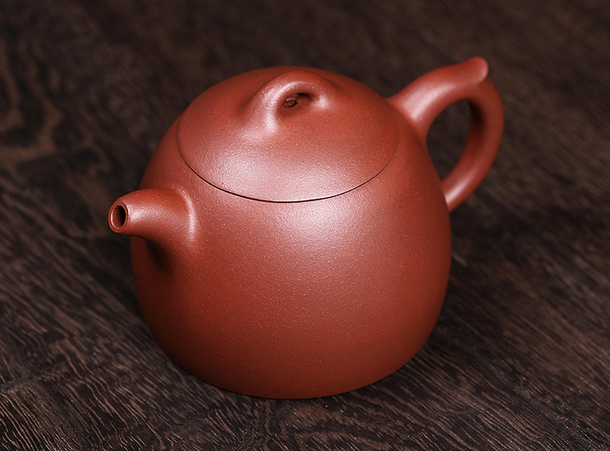
Beyond its pore structure, Yixing purple clay’s mineral composition plays a crucial role in flavor enhancement. The clay is rich in iron oxide (hematite), which gives it its distinctive purple hue and acts as a natural catalyst during brewing. When hot water interacts with the clay, trace amounts of iron ions are released, triggering a chemical reaction that converts free polyphenols into more stable, less astringent complexes. This reaction not only softens the tea’s mouthfeel but also deepens its color, creating a rich, golden liquor that is visually appealing as well as flavorful. Additionally, minerals like mica and quartz in the clay help balance the pH of hot water, which tends to become slightly alkaline when heated. This pH balance prevents over-extraction of bitter compounds, ensuring that the tea’s flavor remains harmonious and well-rounded, even with multiple infusions.
Another key advantage of Yixing purple clay teapots is their superior heat retention. The dense, unglazed clay has low thermal conductivity, meaning it retains heat longer and distributes it evenly throughout the pot. This stable temperature environment is critical for extracting the full flavor of loose leaf tea, especially for tightly rolled teas like oolong or compressed teas like pu-erh. Unlike thin porcelain teapots that lose heat quickly, Yixing teapots maintain a consistent brewing temperature, allowing the tea leaves to unfurl gradually and release their flavor compounds in a controlled manner. This slow, even extraction ensures that the tea’s delicate top notes (like the floral aroma of Fenghuang Dancong) and deep base notes (like the woody undertones of aged tea) are both fully expressed, resulting in a more complex and layered flavor profile.
The traditional craftsmanship of Yixing teapots also contributes to their flavor-enhancing abilities. Master craftsmen use hand-kneading and hand-beating techniques to shape the clay, which compacts the pores evenly and creates a smoother internal surface. Unlike machine-made teapots, handcrafted Yixing pots have a slightly uneven interior texture that gently agitates the tea leaves during brewing, promoting better contact between the leaves and water. Additionally, the spouts of Yixing teapots are carefully designed to have a smooth, unobstructed flow, which prevents the tea from oxidizing excessively as it is poured. This minimizes the loss of aromatic compounds and ensures that the tea reaches the cup with its full flavor intact.
It’s important to note that the flavor-enhancing benefits of Yixing purple clay teapots are not limited to a specific type of loose leaf tea. While they are particularly well-suited for fermented and semi-fermented teas (like pu-erh, oolong, and black tea), they also improve the flavor of green tea and white tea when used correctly. For delicate teas like Longjing (Dragon Well) or Baihao Yinzhen (Silver Needle), a high-fired Yixing teapot (which has denser pores) is recommended, as it retains just enough heat to extract the tea’s sweetness without scalding the leaves (which would produce a grassy, bitter taste). Regardless of the tea type, the key is to match the teapot’s clay type and size to the tea—another practice rooted in traditional tea wisdom that maximizes flavor enhancement.
For tea lovers looking to experience the full benefits of Yixing purple clay teapots, proper care is essential. Avoid using soap or chemical cleaners, as the clay’s porous nature will absorb these substances and ruin the tea’s flavor permanently. Instead, clean the teapot with hot water and a soft brush after each use, then air-dry it upside down with the lid off to prevent mold growth. With consistent use and proper care, a Yixing teapot will continue to improve with age, its flavor-enhancing abilities growing stronger as it seasons. This longevity is part of what makes Yixing purple clay teapots not just a brewing tool, but a cherished heirloom that can be passed down through generations.
In conclusion, Yixing purple clay teapots improve the flavor of loose leaf tea through a combination of unique structural, mineral, and thermal properties, paired with traditional craftsmanship. Their double-pore structure selectively absorbs bitter compounds and retains aromatic oils, their mineral composition softens the tea’s mouthfeel, their heat retention ensures even extraction, and their handcrafted design promotes optimal leaf-water contact. Whether you’re a casual tea drinker or a serious collector, a well-chosen Yixing purple clay teapot is an investment in better-tasting tea—a tool that connects you to centuries of Chinese tea culture while enhancing the simple pleasure of a perfect cup.